WRITTEN BY: VAIBI VANVANI
ART BY: STELLA KANEZANOU
Sex and pleasure particularly in its intersection with female sexuality and desire, has long been a compelling subject in the arts. Historically obscured by patriarchal conventions or rendered through a male gaze, female pleasure is now increasingly explored by women artists with agency, complexity, and layered ambiguity. Greek contemporary painter Stella Kapezanou stands out in this domain, boldly using her work to reclaim visual narratives around femininity, sensuality, and the intimate contradictions that exist within desire.
Stella Kapezanou is a visual artist from Athens, Greece, whose work delves into vulnerability, symbolism, and the aesthetics of power through large-scale paintings and ceramic sculptures. With a background in fashion and media, she studied at the Athens School of Fine Arts and earned an MA from Chelsea College of Arts in London. A Fulbright Fellow in 2024, she explored themes of gender and sovereignty during her residency in New Mexico. Her art has been exhibited internationally, with recent solo shows including Corn Maidens in New York and Emerald Paintings in Athens, and she will present Here Be Dragons in summer 2025.
Kapezanou’s vivid canvases often depict saturated scenes of leisure, glamour, and consumption. At first glance, her subjects, figures reclining on pool chairs, sipping cocktails, or basking in sunlit interiors, may suggest pure indulgence. However, her work carries a deliberate undercurrent of ambivalence.
These scenes, though hyper-stylized and seductive, challenge the viewer to question what is being enjoyed, who is watching, and whether pleasure is truly being experienced or simply performed. In this way, Kapezanou taps into a deeper narrative, how pleasure, especially female pleasure, is mediated through systems of power, beauty standards, and social performance.
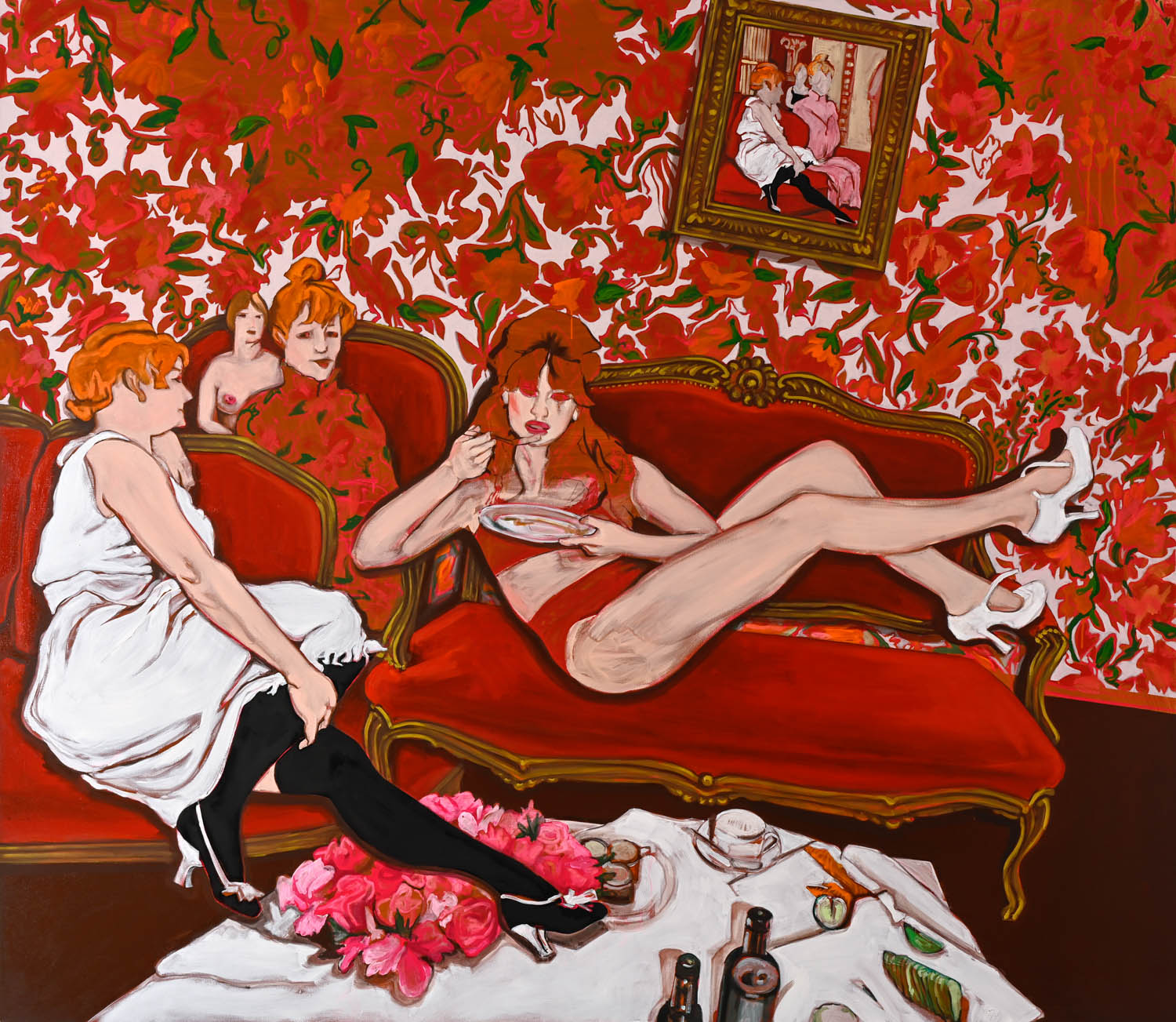
Kapezanou’s vivid canvases often depict saturated scenes of leisure, glamour, and consumption. At first glance, her subjects, figures reclining on pool chairs, sipping cocktails, or basking in sunlit interiors, may suggest pure indulgence. However, her work carries a deliberate undercurrent of ambivalence. These scenes, though hyper-stylized and seductive, challenge the viewer to question what is being enjoyed, who is watching, and whether pleasure is truly being experienced or simply performed. In this way, Kapezanou taps into a deeper narrative, how pleasure, especially female pleasure, is mediated through systems of power, beauty standards, and social performance.
The question of who gets to enjoy pleasure remains central. In a culture where female sexuality has often been commodified or shamed, representing women as agents of their own desire disrupts a long-standing norm. Artists like Kapezanou play with this disruption by blurring the lines between empowerment and artifice. Her figures often look directly at the viewer, poised yet emotionally distant, inviting interpretation but resisting clear conclusions. This ambiguity is vital, it reflects the complexity of pleasure as both an internal experience and a social construct.
Beyond individual experience, Kapezanou’s work connects to broader feminist discourses around autonomy, visibility, and emotional authenticity. It mirrors a cultural shift where female artists are reclaiming the language of eroticism, not to shock or titillate, but to express interiority, complexity, and contradiction. Artists such as Jenny Saville, Tracey Emin, and Mickalene Thomas similarly use their mediums to dissect the layers of identity and sexuality, forging a lineage that Kapezanou continues with her own distinct visual language.
In sum, pleasure in art, when viewed through the lens of female experience, is not simply about indulgence or beauty. It becomes a site of resistance, ambiguity, and power. Stella Kapezanou’s work exemplifies this dynamic tension, offering scenes that are as visually delightful as they are intellectually provocative. Her paintings do not offer easy answers; instead, they ask us to dwell in the in-between: between gaze and agency, desire and detachment, celebration and critique. In doing so, they reframe the conversation about what it means to portray pleasure, not as something consumed, but as something complexly felt.
