WRITTEN BY: AMANI JACKSON
ART BY: NOAH VERRIER
Unhealthy foods and human pleasure share a striking sensory and psychological language, one expressed vividly through the colors of orange, green, brown, and yellow. Each hue evokes a specific emotional and bodily response tied to indulgence, desire, and satisfaction. Just as pleasure operates on impulse, intensity, and transience, these foods use color and taste as a form of seduction, triggering cravings that are more emotional than nutritional. Through this lens, food becomes more than mere consumption. It is a sensory performance of pleasure, where artificial brightness and rich tones mimic the highs and lows of human longing, rebellion, and fleeting joy.
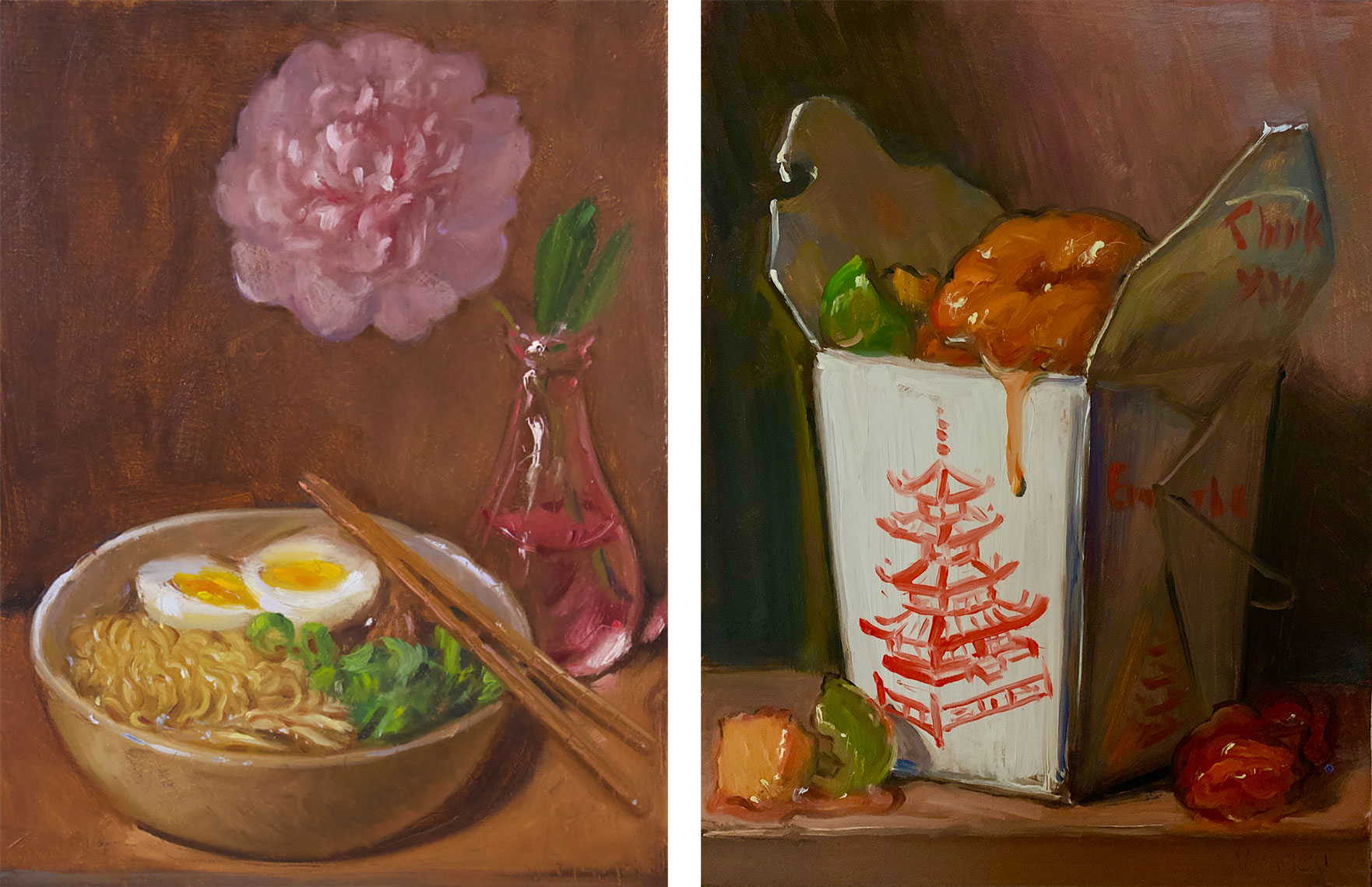
Noah Verrier’s realistic oil paintings feature food from both the past and present. His works are painted with a technique reminiscent of late 19th-century still life paintings, drawing inspiration from classical European traditions while infusing a contemporary sensibility with modern-day foods. His art evokes the senses and memories, allowing viewers to lose themselves in time and recall the delicious foods they’ve once enjoyed.
Noah’s use of vibrant oranges, yellows, and deep browns elevates greasy burgers, glistening fries, and buttery waffles into objects of desire. Each hue evokes the emotional pull of craving food. The warmth of yellow sparks instant joy, the boldness of orange teases the senses, and the richness of brown wraps it all into comfort. Through color and texture, Verrier blurs the line between art and appetite, making his painting not just pleasing to the eye but pleasing to the stomach.
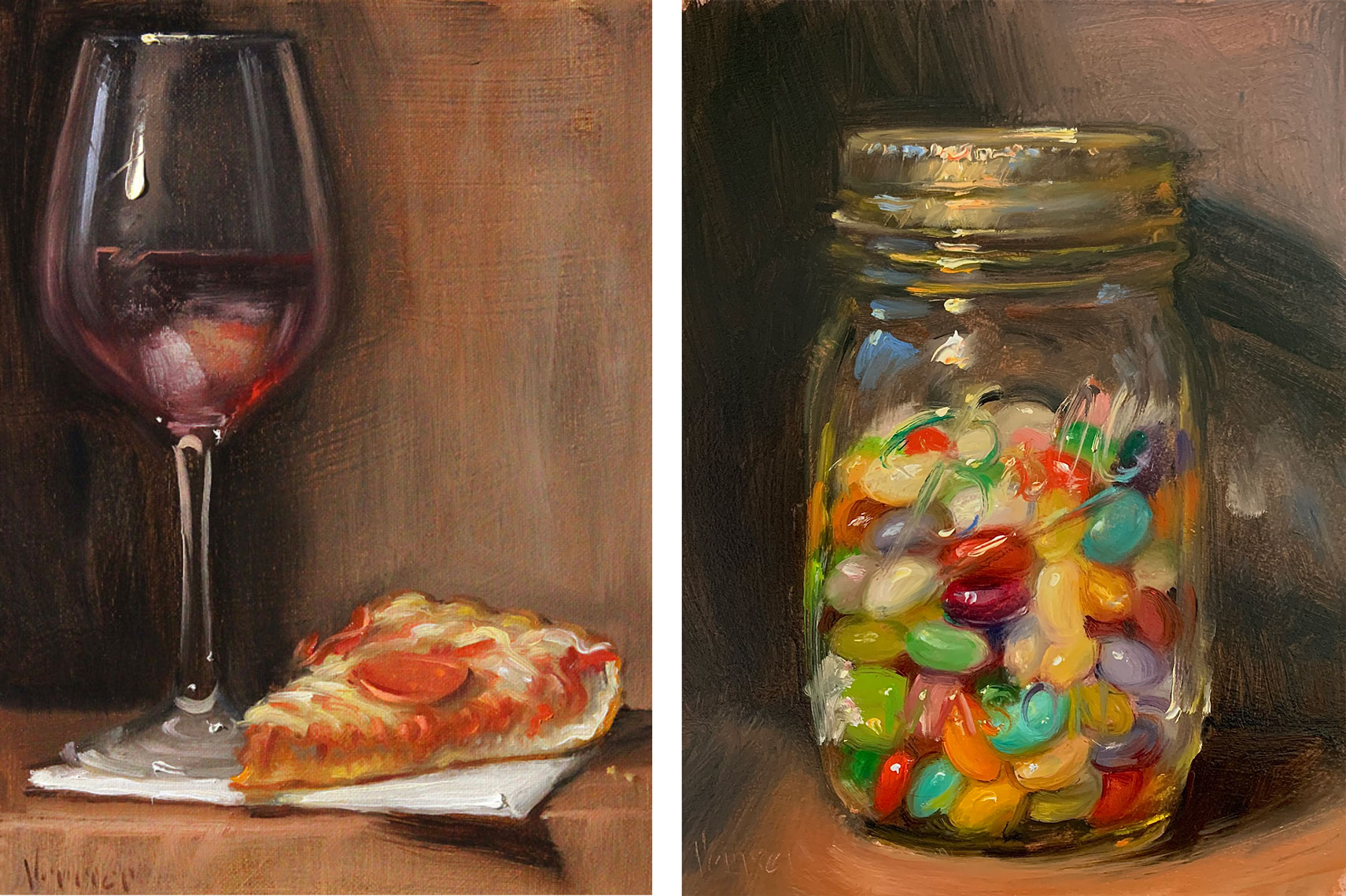
Chocolate, dark and velvety like a chocolate bar, mirrors the deep, slow pleasure of forbidden desire. It melts like a secret, rich and smooth, a symbol of decadence that wraps around the senses. It’s the color of comfort and craving; the physical expression of something we know we shouldn’t want but take anyway. Yellows, found in golden fries and buttery pastries, sparkle with the joy of immediate gratification. They’re the color of sunshine, chaos, fast love, quick bites, and the rush of sweetness that fades almost as fast as it arrives. Yellow is the giggle, the spontaneous flirtation, the thrill that lives on the surface and disappears in a bite. Orange, the shades of fizzy sodas, candied glazes, and bright cheese dust create a reckless kind of pleasure. Orange is the bold friend who shows up uninvited and convinces you to dance barefoot on tables. It’s a synthetic joy wrapped in a salty lie. Then come the green, not the crisp, fresh tones of health; but the neon greens of sour candies a sugary drink, daring us to bite into our own bad decisions. These are the colors of trickster pleasures, of strange cravings that thrill simply because they’re unnatural. They’re envy, energy, and electric pleasurable rebellion in edible form.
In this way, the vibrant colors and textures of food transcend their role as mere sustenance, becoming powerful symbols of desire, indulgence, and transient pleasure. They act as both a visual and emotional language, speaking directly to our senses and instincts. By exploring this sensory connection, we come to understand that food, much like pleasure itself, is not just about nourishment but about moments of escape, satisfaction, and fleeting joy. The interplay of color, taste, and emotion reveals the deeper psychological patterns that shape our relationship with indulgence, reminding us that what we consume often mirrors our inner desires and cravings for immediate gratification.
