WRITTEN BY: LIVIA SHAH-CRUGER
Images are omnipresent in daily life, shaping how we as individuals consume information and interact with the world. In an era dominated by visual culture, the importance of visual literacy has become crucial for navigating a landscape where images are central to communication and cultural expression.
Gilleam Trapenberg, born in Curaçao and a graduate of The Hague’s Royal Academy of Arts, ap- plies the power of imagery to challenge and dis- mantle stereotypes that often define the Dutch Caribbean islands in the eyes of outsiders. Trapenberg’s visual projects are deeply rooted in the colonial past, mass tourism, and the Western gaze that have historically influenced perceptions of the Caribbean. His work is characterised by vibrant colours, creating dynamic images that offer a glimpse into everyday life on these islands.
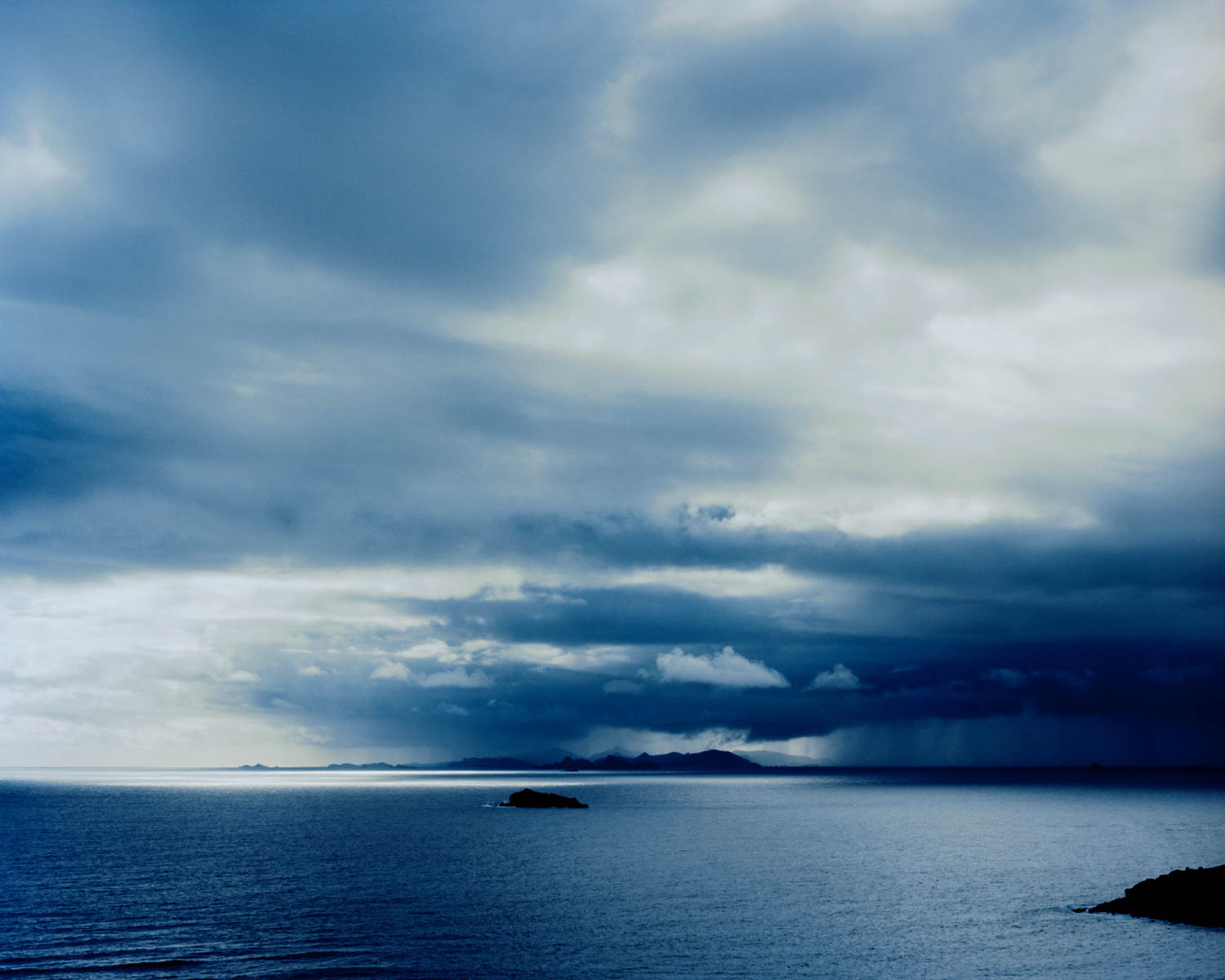
Fascinated by image culture, propagated by the old holiday postcards, which often portray the Caribbean through a Western lens of exoticism and capitalism. The choices for his visual projects are driven by his inter- est in status of images and representation and the expressions of identity, on the Dutch Caribbean islands, that are strongly influenced by a complex history of colonization, slavery, and migration. His graduation project, “Big Papi,” marked the beginning of his focus on the identity of these islands and the urge to tell the stories of its people.
Living in the Netherlands has given Trapenberg a different perspective, the distance allows him to reflect on his relationship with the islands, infusing his work with a sense of melancholy. His art becomes a love letter to his homeland, capturing the complexities of its identity and his own con- nection to it. This distance also enables him to view them with fresh eyes each time he returns, continually renewing his creative vision.
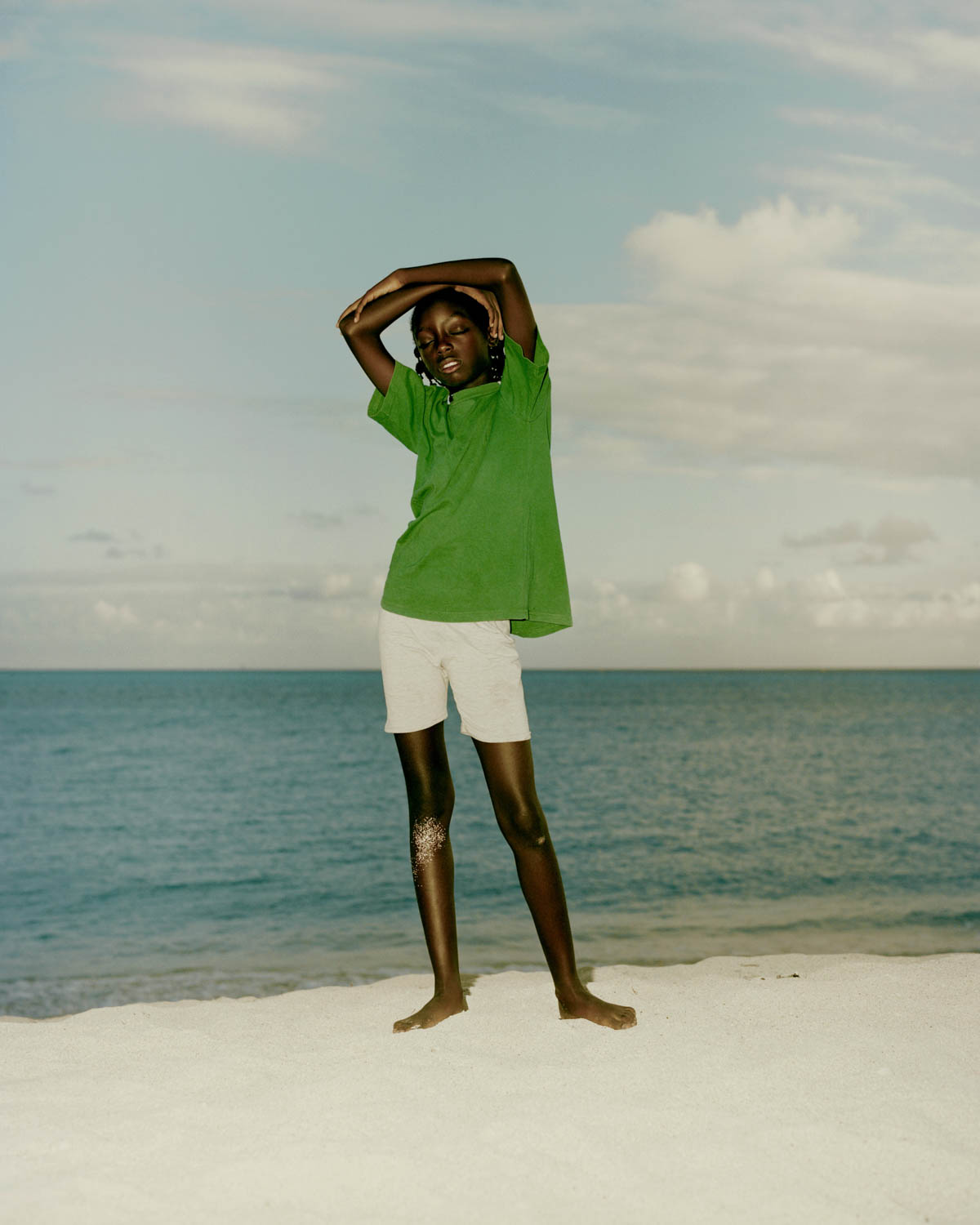
Trapenberg’s work has been exhibited at major art institutions including Stedelijk Museum, Am- sterdam and FOAM, Photography Museum Amsterdam. His first photobook ‒ Big Papi ‒ was published in 2017. His exhibitions evolve with each show flowing into the next, creating a cohe- sive body of work centered around, and breaking down, the image of stereotypes and stigmas. He aims to foster a deeper understanding of the Caribbean islands and to challenge ideas. By creating a dialogue around the identity and representation, Trapenberg’s work serves as a powerful tool in redefining how these islands are perceived and with each project he invites viewers to look beyond the surface.
